

The press is under attack on many fronts. Politicians target it. Misinformation campaigns cross borders. Public distrust is high, and some people exploit it cynically. Each of those deserves its own essay. This one is about money: the unit economics of the news business and the economic ecosystem that depends on it.
The news business has always produced three things of value: attention, intelligence and authority. In the 20th century it was paid for one of them. In the 21st, it is paid properly for none.
The economic attack has three prongs. Other industries now collect most of the money each asset generates. Ad platforms monetize the attention. AI companies monetize the intelligence. The public relations industry monetizes the authority. All three are growing. The industry that supplies them is shrinking.

I have spent my career in PR, so I say this as a beneficiary. For media to thrive this century, its leaders and the industries that depend on it have to look at all three assets, including the two that have never appeared on a publisher’s balance sheet.
Attention


Each new layer sits further from the people who produce the work, and each one keeps the money.
Intelligence

Authority

Publishers have found ways to earn from their brands without selling coverage. The Economist’s parent company has sold research through the Economist Intelligence Unit since 1946. The Times bought Wirecutter in 2016 and earns commissions on the products it recommends. Many publishers now run studios that produce sponsored content for paying clients. These help. None of them returns to the newsroom the value of the authority it creates every day.

Subscriptions are the usual answer, and they work for a few. The Times has doubled its staff in a decade. There is not enough subscription revenue to go around. Most local and regional outlets will never have a national paying audience.
Think about bees. Few people notice pollinators at work or understand how much of the food chain rests on them. Everyone would notice if they disappeared. The press is the same kind of hidden architecture, and the relationship is symbiotic. Advertising, AI and PR all feed on what it produces, and most people in those industries never think about where it comes from.

The social and political costs of a weaker press are real, and others have covered them at length. The economic cost gets less notice. If the press fails, the industries above it lose their supply.
What each industry owes
It is in the interest of brands, AI companies and PR firms to keep the press healthy, just as it is in everyone’s interest to protect pollinators.
Brands need trusted places to appear. They can direct more of their spending to publishers that produce original reporting. AI companies need a steady supply of accurate, current information. They should pay for it at a rate that reflects its value, and pay far more publishers than they do today.
PR is my industry, and this was my wake-up call. It is the reason Qwoted exists.
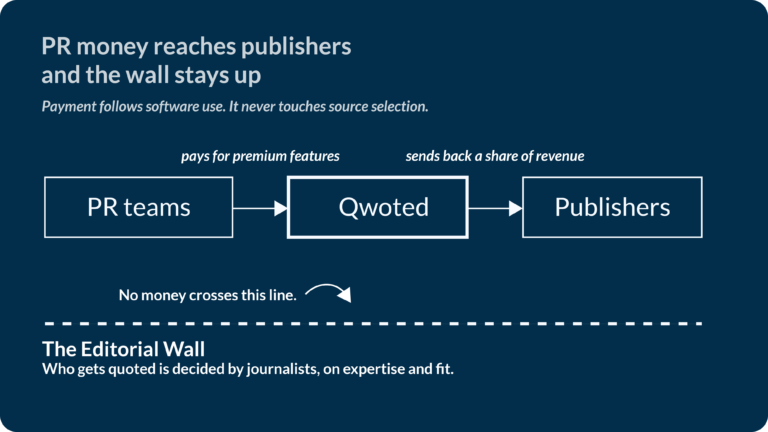
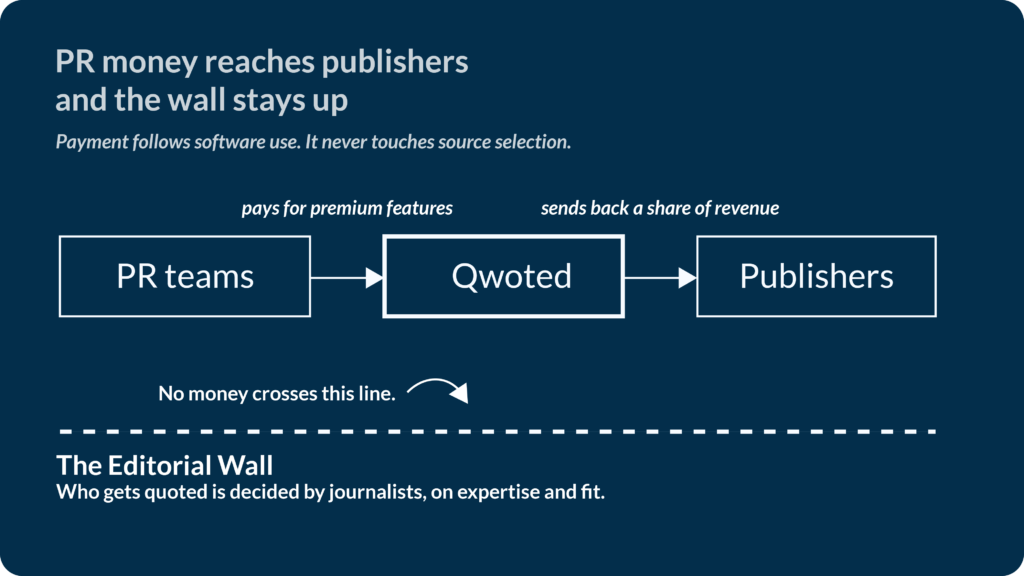
Qwoted connects journalists with expert sources. Journalists use it free. Authority is worth something because it cannot be bought, and Qwoted keeps it that way. Experts are selected on expertise and fit for the story, and no payment changes who gets quoted. Our revenue comes from PR agencies and in-house communications teams that pay for premium features.
We send part of that revenue back to the media. We began with grants and donations to organizations such as Reporters Without Borders. We now have commercial agreements with publishers and pay them directly for using our software. Our long-term goal is to earn $1 billion from the authority market and remit $900 million of it to the media. We do this out of enlightened self-interest. Our business depends on a press worth being quoted in.
What media leaders must do
The beneficiaries cannot fix this alone. Media leaders have to change how they see the economics of their own business.
Attention is one asset of three. Publishers hold the current, verified information that AI products need, and they should negotiate for it together and at a higher price. They are also the largest source of authority in public life. They can earn from the industry built around that authority while the wall stays intact.
Publishers have been reluctant to look at the second and third assets. The ones that survive will get serious about all three.
- eMarketer: Meta to surpass Google in digital ad revenues
- Marketing Dive: WARC global ad forecast
- TechCrunch: Similarweb on zero-click news searches
- DesignRush: Chartbeat and Reuters Institute traffic data
- AI Vortex: NYT v. OpenAI status
- Origin Data Partners: AI licensing deal tracker
- TechCrunch: OpenAI valuation
- BuzzStream: journalists and PR professionals in the U.S.
- IBISWorld: global PR agencies
- Media Copilot: Press Gazette job cut tally
- AP via ABC11: Washington Post cuts