
AI is already reshaping parts of healthcare, but its impact today is more practical than revolutionary.
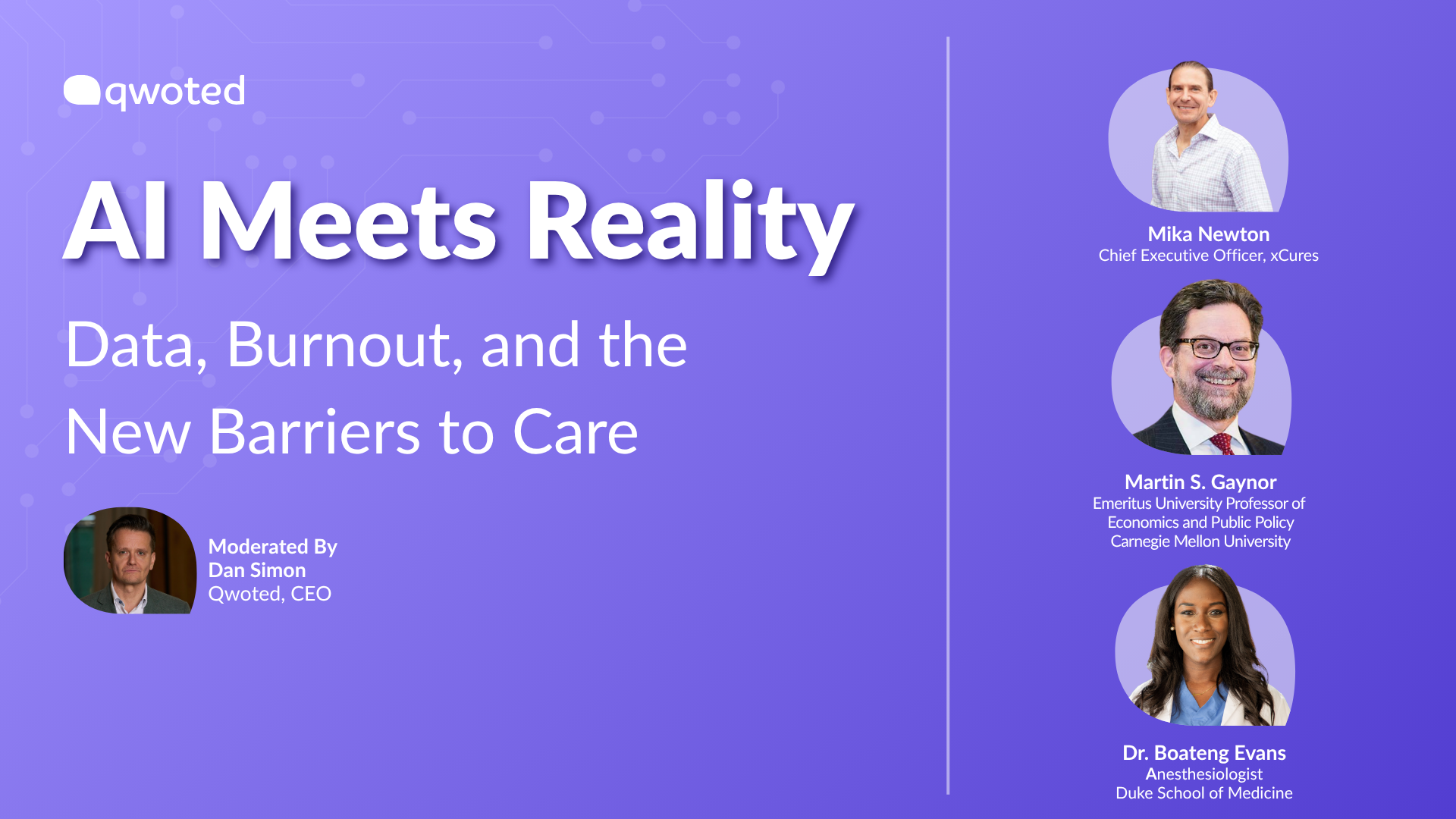
During a recent Qwoted Live session, experts across clinical care, health tech, and economics explored where AI is delivering real value today and where it still falls short.
Where AI Is Delivering Today
In practice, AI is proving most useful behind the scenes. From automating documentation to improving data flow and supporting clinical decision-making, these tools are helping reduce administrative burden and streamline workflows.
As Mika Newton, CEO of xCures, described it, AI is becoming a “backbone” for clinical and operational efficiency, particularly in areas like medical record management and data transfer.
At the clinical level, Dr. Adjoa Boateng Evans, ICU Physician and Anesthesiologist at Duke, pointed to real-time applications already in use, including AI tools that help monitor patients during surgery and optimize care with a level of precision not previously possible.
The Tradeoffs: Bias, Access, and Control
Progress comes with real challenges.
Dr. Boateng Evans also raised concerns about bias in AI systems, noting that many models are trained on data from large academic hospitals. This creates a risk of reinforcing disparities for underrepresented populations.
From a systems perspective, Mika Newton highlighted how reliance on proprietary data and algorithms could concentrate power among large healthcare organizations, making it harder for smaller players to compete.
Adding to this, Martin Gaynor, Professor Emeritus at Carnegie Mellon University, emphasized the broader market implications, including how technology adoption can reshape competition and access across the healthcare system.
Efficiency vs the Human Experience
AI can make healthcare more efficient, but not always more human.
Dr. Boateng Evans pointed to the growing tension between access and experience. While tools like patient portals and AI assistants increase convenience, they can also overwhelm clinicians and create situations where patients receive sensitive information without proper context.
These moments reinforce a key reality. Human interaction remains essential, especially in complex or high-stakes care.
A Growing Gap in Trust
Expectations around AI remain uneven.
Mika Newton noted that while healthcare organizations are moving quickly to adopt AI, patients and clinicians tend to be more cautious. The gap often comes down to incentives, with systems prioritizing efficiency while patients prioritize trust and experience.
This misalignment highlights the need for more human-centered implementation as adoption continues to accelerate.
The Bottom Line
AI is not a silver bullet, but it is becoming foundational.
As the panel made clear, its long-term impact will depend less on the technology itself and more on how thoughtfully it is implemented, balancing efficiency with equity and innovation with the human side of care.
If you’re working on stories or pitches around AI in healthcare, health systems, workforce strain, or the future of care delivery, I can connect you directly with any of the panelists, as well as source additional expert perspectives through the Qwoted network.
👉Connect directly with these experts on the Qwoted network:
- Dr. Adjoa Boateng Evans: ICU Physician and Anesthesiologist, Duke School of Medicine
- Mika Newton: CEO of xCures
- Martin S. Gaynor: University Professor of Economics and Public Policy, Emeritus at Carnegie Mellon University